Multimedia - Komisja Nadzoru Finansowego

COMMUNICATION
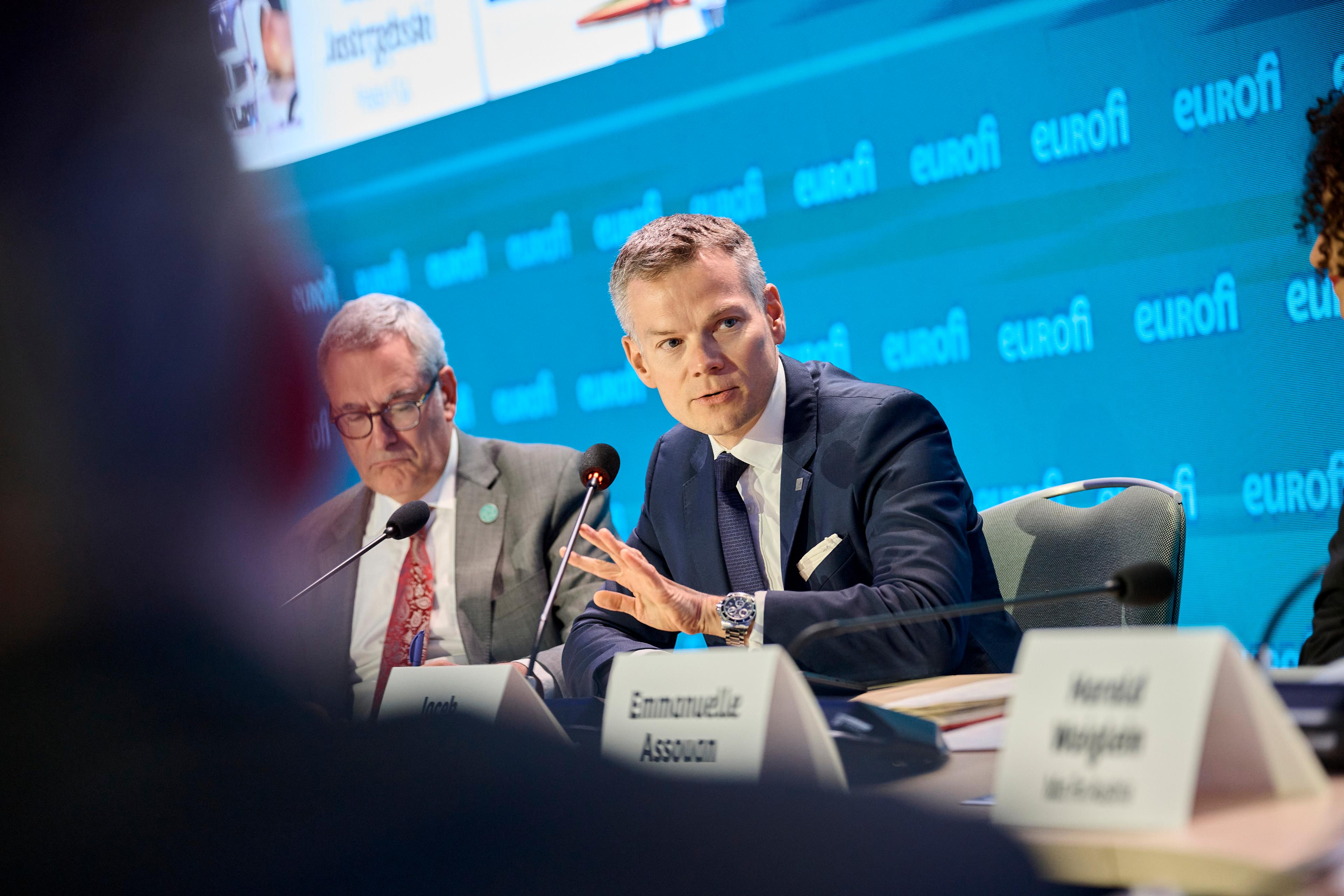
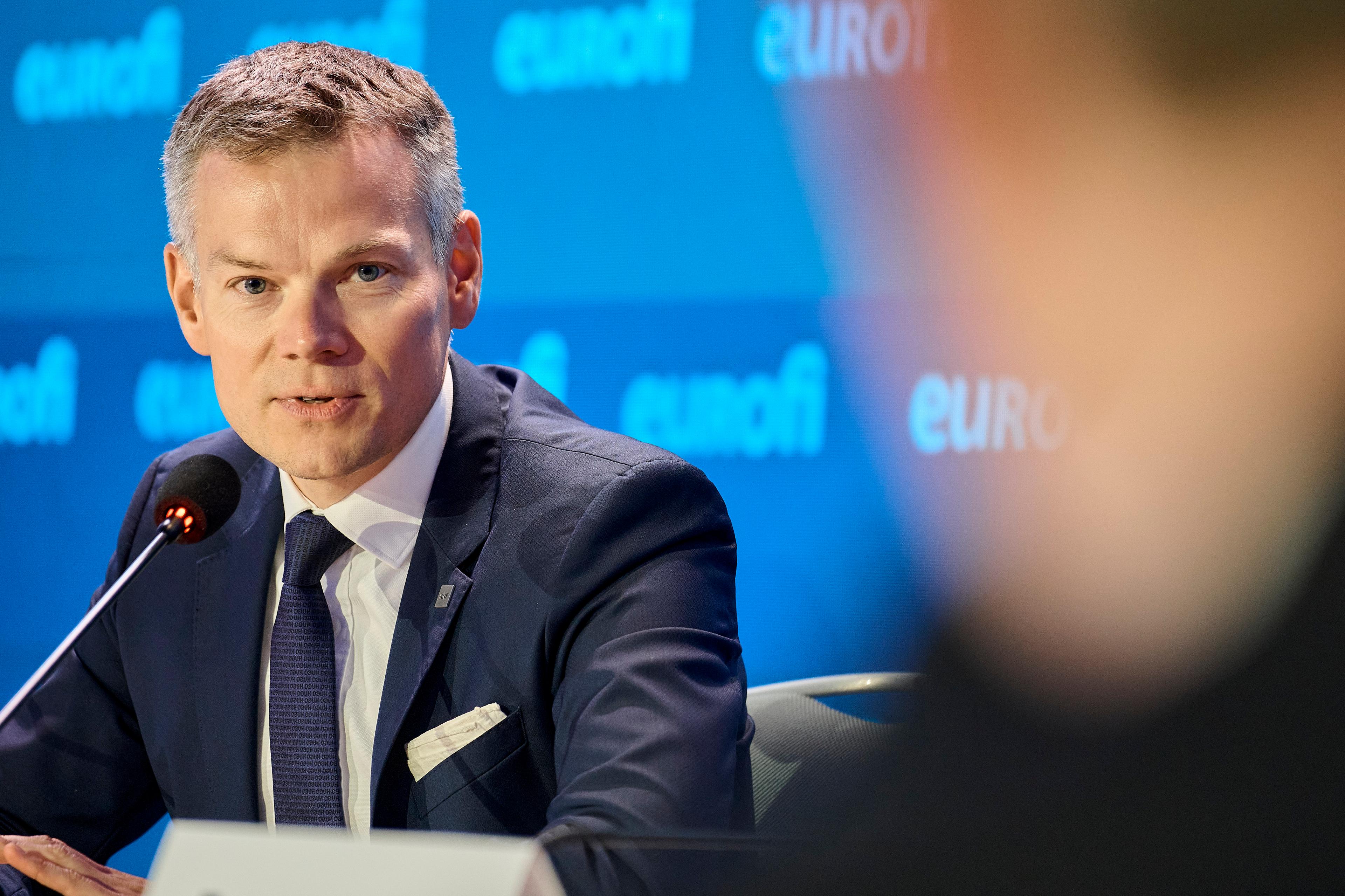
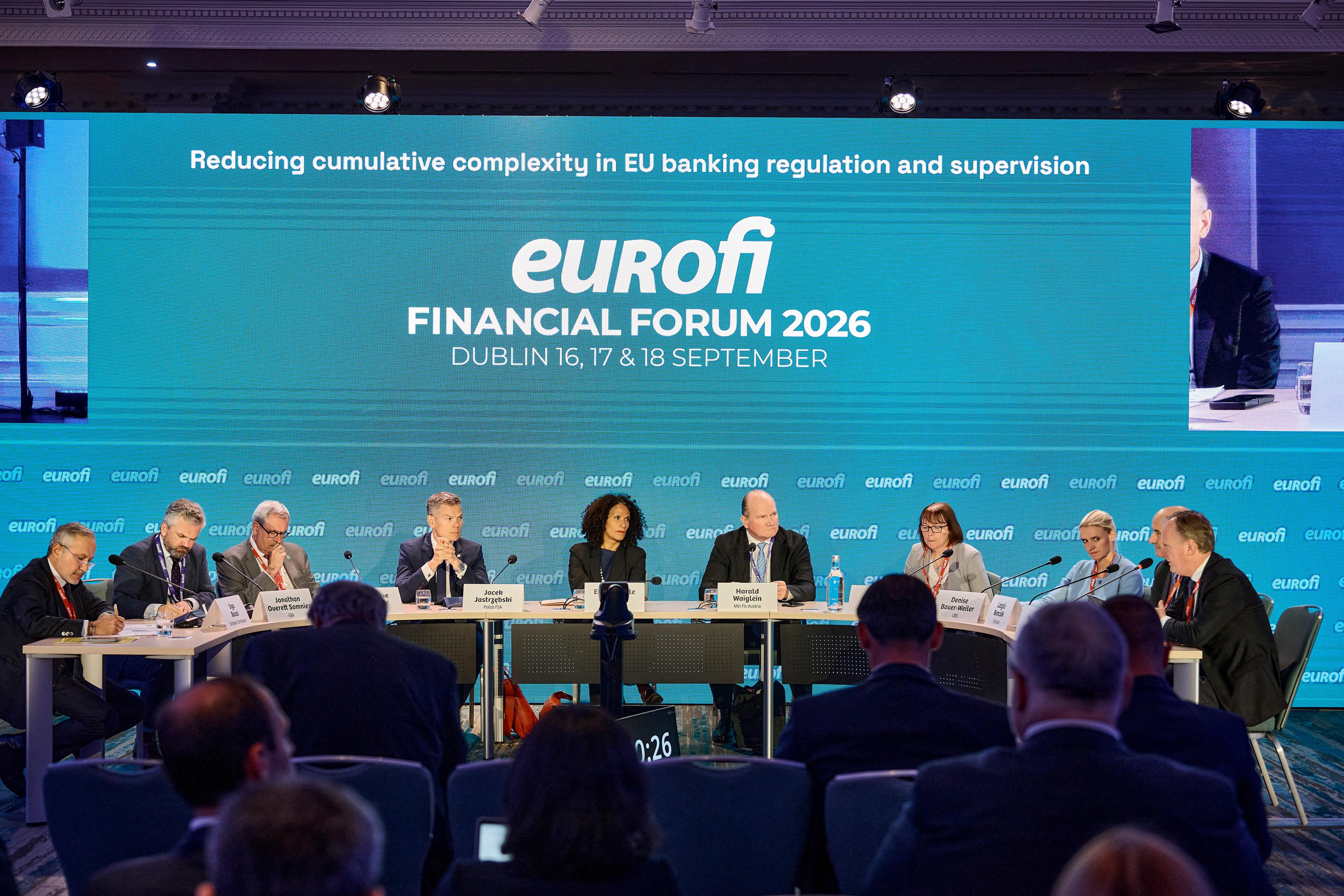
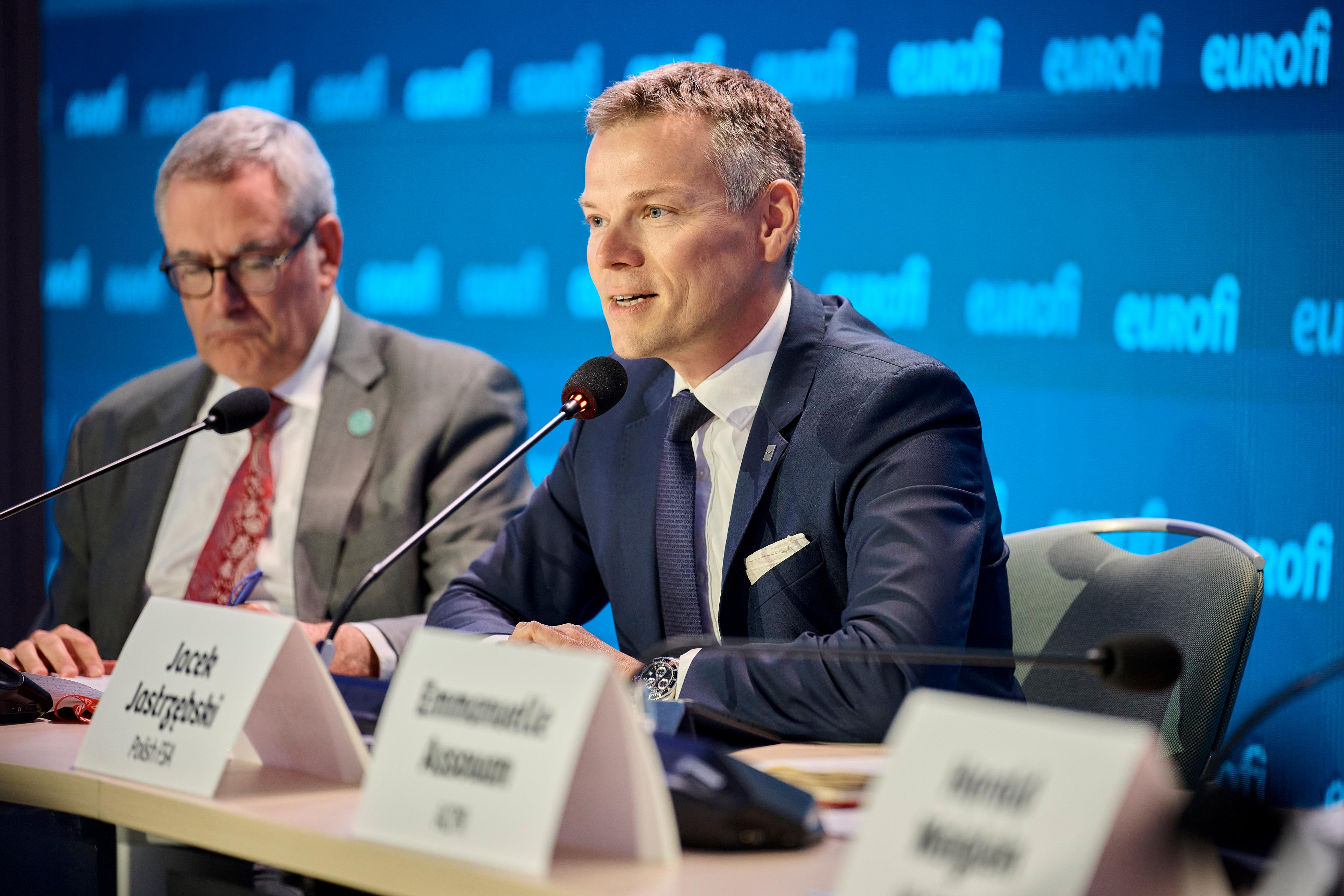
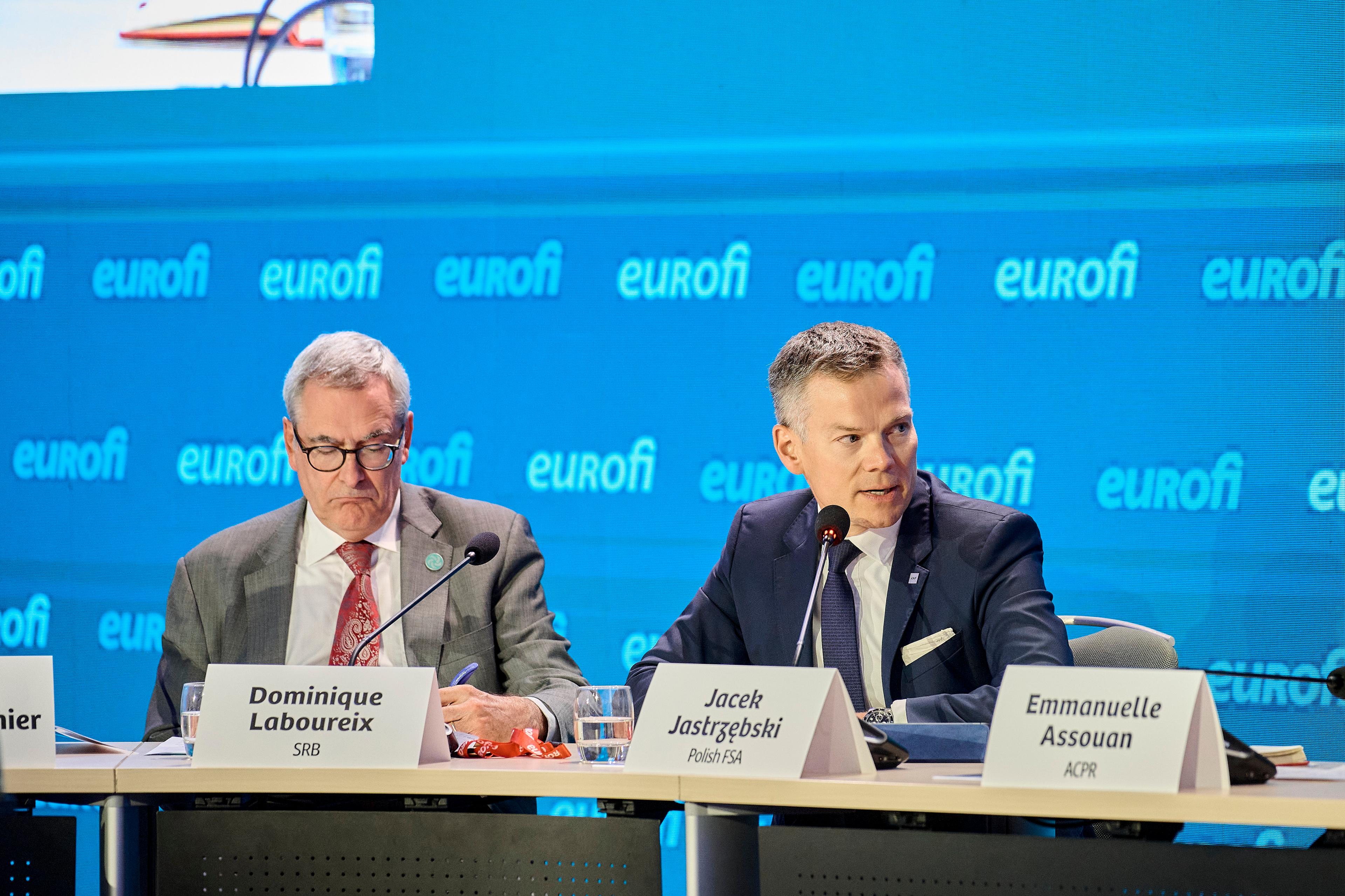
Jacek Jastrzębski spoke at Eurofi Financial Forum 2026
Jacek Jastrzębski – Chair of the KNF, spoke at the panel ‘Reducing cumulative complexity in EU banking regulation and supervision’ during Eurofi Financial Forum 2026 in Dublin.
The panel was devoted to the complexity of European regulations and the possibilities of simplifying the overlapping requirements without compromising the resilience of the financial sector. The discussion also covered proportionality of regulations and better coordination and integration of institutions so as to enhance – through simplified regulations – transparency, predictability and banks’ capacity to finance the economy.
Jacek Jastrzębski spoke about the need to distinguish regulatory simplification from deregulation. He pointed out that it was necessary to reduce excessive regulatory complexity. However, this should not be understood as the weakening of prudential requirements. This is particularly important in the context of discussions about centralisation of capital and liquidity management at cross-border banking groups – this is not about the technical complexity of regulations but about the philosophy and fundamental principles of market integration and distribution of responsibility for financial stability in specific domestic markets that form the common market.
He has emphasised that from the perspective of a host state, if capital and liquidity were managed only at the consolidated level, it would be of key importance to guarantee appropriate safeguards to ensure appropriate capital or liquidity support to subsidiaries of the group. The capital located in a domestic subsidiary should not be treated as ‘trapped’, as it constitutes a foundation for pursuing business and absorbing risk in a given market. If it is the host state, its institutions, and ultimately tax payers, who are responsible for the functioning of a bank, it is hard to expect full acceptance of the centralised capital and liquidity management without appropriate liability mechanisms and safeguards. A deeper integration, including a European deposit guarantee scheme, could change this perspective as it would combine concentration of liability with an appropriate level of common protection at the consolidated level. Even though Poland remains outside the Banking Union, the Polish financial supervisor is ready to participate, actively and constructively, in the pan-European discussion in this regard and share its experience.
The second topic raised by the Chair of the KNF was the scale of business of European banks and their global competitiveness. European financial institutions are not always able to effectively compete with American banks, among other things due to smaller scale of business. The central question is, though, if Europe is ready to accept the establishment of banks so large that they could become leading global players. It is also of key importance to decide on the future supervisory framework for such institutions as well as the related scope of responsibility, including financial responsibility. In this context, the integration of the deposit guarantee scheme may be an important piece. There is value in considering the creation of a special regulatory, supervisory and guarantee model for banks with global ambitions, whose scale of business would make it reasonable to make them subject to pan-European supervision. Such a solution, however, would need to go hand in hand with full centralisation and consolidation of supervision, deposit guarantee scheme and responsibility. This would also require an open and transparent discussion among public and market stakeholders.
Jacek Jastrzębski also spoke about the need to create legislation that is based on simple, comprehensible, and fundamental rules. He emphasised that overly detailed and technical rules often arose from lack of trust between the regulatory body and the market. More regulatory flexibility is possible but requires responsibility and credibility on both sides. The market must prove that it is able to operate maturely based on more general rules, while the supervisor must prove that it is able to apply them in its supervisory actions. Eliminating regulatory gaps through responsible and reasonable business decisions and proportional supervisory decisions may reduce unnecessary granularity without compromising the safety.
The Chair of the KNF also pointed out that capital limitations were not the only or even the main factor affecting the capacity of European banks to compete in the global market. This may be illustrated by the cooperation of European banks with American institutions, which apart from capital-related matters, results from access to competence, know-how and tools, in particular in the area of investment banking. The strengthening of European investment banking may, therefore, be one of elements boosting global competitiveness of the European banking sector.
The Chair of the KNF closed his speech by emphasising that taking actions aimed at developing the financial market and its competitiveness had been part of the KNF’s mandate from its very beginning, and therefore, for years, the pursuit of a balance of interests to avoid the stifling of the market with excessive restrictions had been part of our daily supervisory work.